A two-worker Cloudflare system that scrapes, parses, stores and serves the
AES Schwalbach substitution schedule. A cron worker snapshots PDFs into R2
every hour; a second worker parses the raw HTML live, merges dual sources,
exposes a clean JSON API, and drives a React + Tailwind frontend at
vp.l3on.org.
live
cloudflare workers
durable objects
r2 storage
d1 sqlite
// system architecture
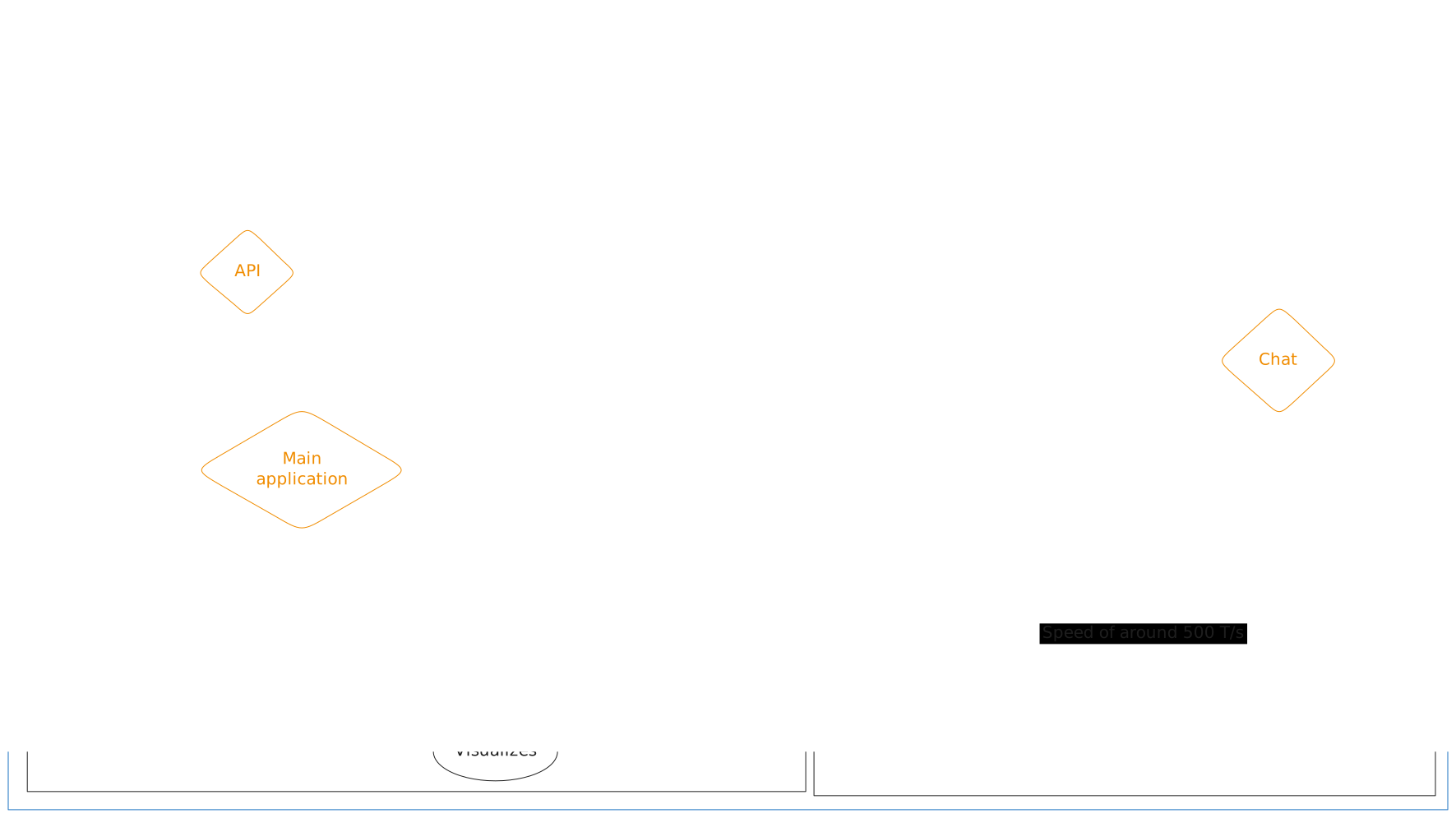
vplan-aes-cf-worker — light mode
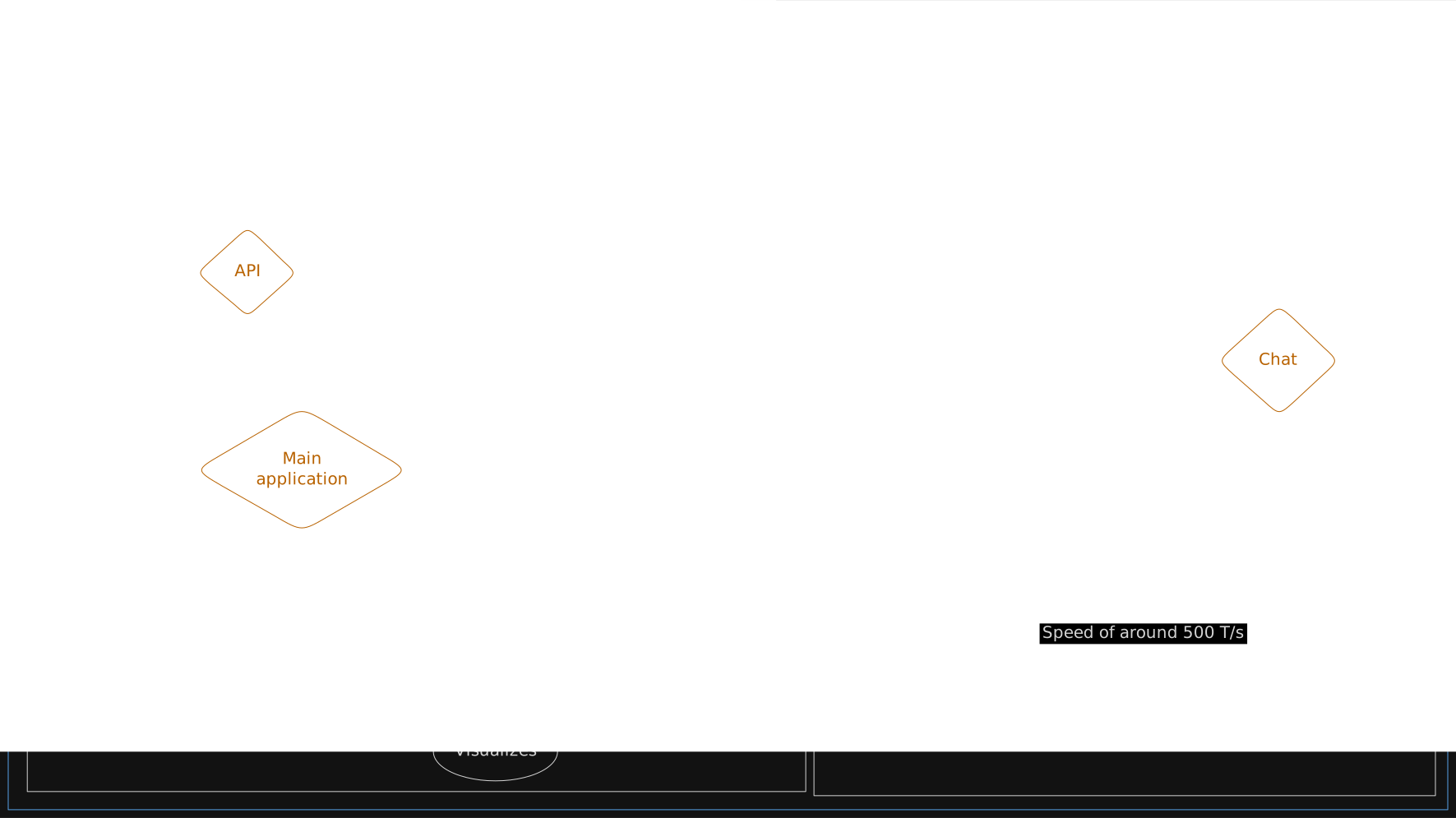
vplan-aes-cf-worker — dark mode
2CF Workers
1hCron Interval
60sCache TTL
∞Edge PoPs
// breakdown
vplan-worker — the snapshot engine[TypeScript]
▾
01A Cloudflare Cron Trigger fires every hour. The worker launches a
Puppeteer browser session (via @cloudflare/puppeteer) and
navigates to both subst_001.htm and subst_002.htm on the Untis portal.
02Before generating a PDF it scrapes the page for a date string — trying the
title, a "Stand:" timestamp, header tags, and finally falling back to today's
date if nothing is found.
03Each page is printed to A4 PDF with
page.pdf() and uploaded to R2 under the key
DD.MM.YYYY/subst_00N.pdf with rich custom metadata (date, source URL, polledAt).
04A separate GET /vplan/parse/:date endpoint extracts plain text from stored PDFs
via unpdf (WASM, no Node) and runs a custom token-stream parser
that handles the flat Untis table layout — splitting rows on repeating day+date anchors,
expanding multi-class cells, and detecting Entfall via column 12 "x" markers.
vplan-aes-cf-worker — the API + frontend[JavaScript]
▾
01The main worker fetches subst_001.htm and subst_002.htmlive on each request (with a 60-second Cloudflare cache). It decodes
the response with the correct charset from the Content-Type header (often ISO-8859-1 for German Umlauts).
02A regex-based HTML parser extracts table rows matching
.list* CSS classes, reconstructing 12-column substitution records.
Entfall detection is tri-modal: explicit "x" in column 12, info field containing
"entfall", or both teacher and room being empty dashes.
03The admin dual-merge endpoint fetches both files in parallel via
Promise.allSettled. It compares their "Stand:" timestamps to decide
which is primary, then merges them into a deduplicated map keyed by
datum|klasse|stunde|fach. Multi-class rows like "07A, 07B, 07C" are
expanded into individual records.
04The frontend is a React 18 + Tailwind SPA served via
env.ASSETS. It auto-refreshes every 60 s, splits compound lesson
slots like "1-2" into individual hour cards, and persists the class filter and
view mode to localStorage.
01Each chat room is a Cloudflare Durable Object with an
embedded SQLite database. On construction it creates two tables: messages
and meta. Messages older than 1 hour are pruned on each write to keep
storage lean.
02Clients connect via WebSocket. The DO uses hibernation
(state.acceptWebSocket) so it only consumes compute when messages
arrive. Incoming JSON is validated, stored, and broadcast to all other connected
sockets in the same room.
03Mentioning @ai or @smartypants triggers
Groq (llama-3.3-70b-versatile) via a 15-second timeout fetch.
The last 20 messages are sent as conversation context. A 3-second per-room cooldown
(stored in the meta table) prevents API flooding.
API endpoints exposed[Routes]
▾
Method
Path
What it does
Auth
GET
/api/vertretungsplan/today
Live parse of subst_001.htm → JSON entries
none
GET
/api/vertretungsplan/tomorrow
Live parse of subst_002.htm → JSON entries
none
GET
/api/admin/vplan-dual
Parallel fetch + timestamp-aware merge of both sources
X-Admin-Code
GET
/api/news
Scrape + decode AES news feed, cache 5 min
none
GET
/api/calendar
Proxy school iCal feed, cache 10 min
none
GET
/api/chat/:code/history
Last hour of chat messages for a room
none
GET
/api/chat/:code/ws
WebSocket upgrade → Durable Object room
none
GET
/api/hub/files
List all files in the R2 file hub
none
POST
/api/hub/upload
Multipart file upload to R2 (PNG/JPEG/PDF ≤10 MB)
none
POST
/api/mensa/sync
FlareSolverr bypass → scrape & store Mensa PDFs
env secret
GET
/vplan/parse/:date
Extract & parse stored R2 PDFs for a date (vplan-worker)
X-API-Key
Interesting engineering decisions[Design]
▾
⚡No n8n dependency — early versions piped everything through n8n
webhooks, adding 8–10 s of latency. Rewriting the HTML parser directly in the Worker
dropped response time to under 300 ms globally.
🔀Dual-source merge — the school sometimes updates subst_001 and
subst_002 asynchronously. The admin merge endpoint compares ISO timestamps from the
"Stand:" field and designates the newer file as "primary", letting it overwrite
any conflicting rows from the secondary.
🔤Charset detection — Untis serves HTML in ISO-8859-1 without
declaring it consistently. The parser reads the charset= parameter from
the Content-Type header before decoding, so German Umlauts (ä, ö, ü, ß) always
survive the round-trip.
🗄️SQLite in a Durable Object — instead of a separate D1 database
for chat history, the DO uses its embedded SQLite via state.storage.sql.exec().
This keeps all room state co-located with the WebSocket connections and eliminates
cross-datacenter round-trips.
🦎WASM PDF parsing on the edge — the vplan-worker uses
unpdf (compiled to WASM) to extract text from stored R2 PDFs without
any Node.js runtime. The token stream is then walked with a state machine that
anchors on repeating "Mi 6.5." / "Do 7.5." day+date patterns to split rows.
Current state & future plans[Post Mortem]
▾
The app is live and used daily during the school year. The core vplan pipeline
is stable — the main active development is around the surrounding features: the Datei-Hub
(file sharing for class materials), the Mensa scraper (bypassing Cloudflare via
self-hosted FlareSolverr), and the school calendar ICS proxy.
Next planned: push notifications when a class's schedule changes (comparing
the new parse result against the previous snapshot stored in D1), and a
teacher-view mode behind the admin code that shows room conflicts across
all classes simultaneously.